

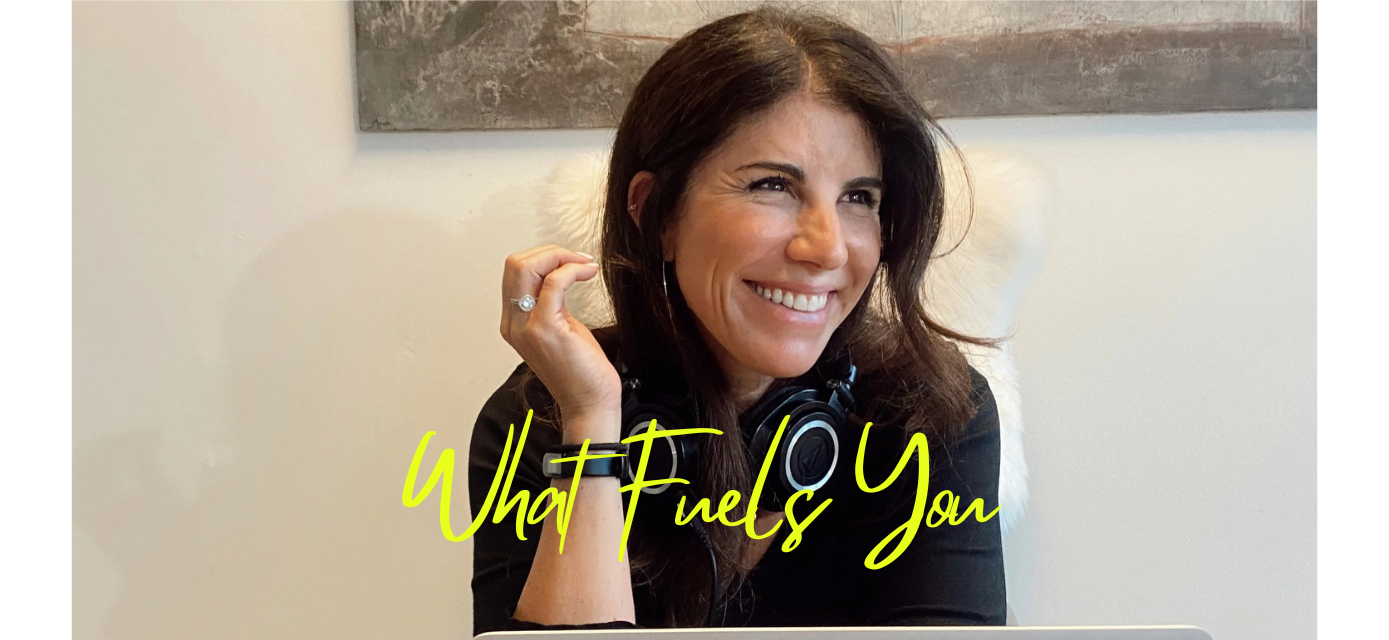

From Tech to Turmeric: Raina Kumra's Fuel for Innovation
Raina Kumra, Founder of SpiceWell & Advisor to Google X
Raina Kumra has advised Google X, modernized media for the Obama administration, and launched one of the most widely-used technology ethics frameworks in the world. Then a family health crisis during the pandemic sent her back to her grandmother's Ayurvedic recipes — and accidentally started a company. In this episode, SpiceWell founder Raina Kumra joins Fuel Talent CEO Shauna Sperland to talk about growing up on a street called Utopia Place, building movements before there were fields to put them in, and why creating things that haven't existed yet is her ultimate fuel.
The Woman Who Built a Movement Before Anyone Had a Name for It
Before "food as medicine" was a wellness trend, before "AI ethics" was a LinkedIn buzzword, Raina Kumra was already doing the work.
She's advised Google X. She helped modernize the Obama administration's media infrastructure. She launched the Ethical OS — a technology ethics framework now downloaded over a million times and embedded in the language of companies like ChatGPT. And in the middle of a family health crisis during a pandemic, she accidentally started a spice company.
In the latest episode of What Fuels You, Fuel Talent CEO Shauna Sperland sits down with Raina — calling in from Mumbai, where she's currently living with her family — for a wide-ranging conversation about heritage, reinvention, and what it really takes to build something new.
Growing Up on Utopia Place
Raina grew up in Silicon Valley — specifically, on a street called Utopia Place.
"I'm not even kidding you," she tells Shauna. It's a detail that sounds too on-the-nose, but it captures something real about her upbringing: an idyllic, tinkering community where people were genuinely building startups out of their garages, and where her father — an engineer who came to the US from India in 1974 as a newlywed — eventually became one of California's first independent wireless network entrepreneurs.
Her parents immigrated when India looked very different than it does today. And Raina offers a fascinating lens on what that means for Indian American identity: immigrants don't carry a living, evolving culture with them — they carry a snapshot in time.
"If you're a drop of blue in a yellow sea," she explains, "you have to really retain your blue."
Meanwhile, India kept evolving. The result, she observes, is that many Indian Americans are in some ways more rooted in a historical version of Indian culture than people actually living in India today.
A Creative Kid Who Was Terrified of Math
Raina describes herself as a language arts kid — spelling bees, songwriting, reading, art. She and a tight crew of creative girlfriends took classes at CalArts, drove up to San Francisco for extras, and were, in her words, "very serious about becoming artists."
Math was a different story. "I just wasn't — I didn't have that same flow," she admits.
By 10, she was babysitting neighborhood kids (a fact she now finds slightly alarming in retrospect). In high school, she played in bands and had a clear dream: she wanted to be a rock star.
That dream took her to Boston University to study film production — as far from the West Coast as she could get. "I just found whatever universal app extra checkbox I could click on and went for the furthest possible school from home."
From Film to the Internet: A Pivot That Changed Everything
After film school, Raina shot a documentary for a year, came back to edit it — and discovered that every piece of equipment she'd trained on had changed. The industry had moved online.
"I was like, what is this internet thing? I have to go figure this out."
That urgency took her to NYU's Interactive Telecommunications Program at Tisch — essentially, she describes it, "the MIT Media Lab but for NYU." She graduated at a moment when she was often the only person in the room who knew how to build a website. That skill became her entry point into advertising.
Her first project at Bartlebogle Hegarty, under Cindy Gallop, was a 9/11 memorial documentary for Cantor Fitzgerald employees, directed by Errol Morris. It was a bridge between her documentary roots and the advertising world — and proof that the work didn't have to be empty.
"It wasn't just selling crap," she says. "It was actually telling really meaningful stories."
Building Juggernaut — and Learning the Process
After years in advertising, Raina launched Juggernaut, her own transformation bureau. The clients were impressive — Nike, Microsoft, Disney, Burberry. One early project was among the first campaigns to map user images into 3D digital elements, in a collaboration between Coke and Facebook.
But what advertising really taught her, she says, wasn't about branding or creativity. It was about process.
"Once you really understood the process, you could apply it to everything. Same with filmmaking — once you understand from script to edit, you can do that to anything. It doesn't have to be a film. It can be a product. It can be an idea."
That insight — that the process of taking something from your head and making it real is transferable — became the through-line of her entire career.
The Obama Administration: A Shoulder Tap
Raina's path to the White House wasn't planned. A friend — Katie Stanton, who had just left Google — told her the government could use people like her. Simple as that.
She ended up at the State Department, and then was asked to co-lead innovation at the Broadcasting Board of Governors: five dusty radio and television networks that needed to enter the digital age. Her job was to modernize them, get them onto SoundCloud and iTunes, and drag Cold War-era communications infrastructure into the 21st century.
"Taking it from a thought into the real world" — that's how she describes what she does. The medium keeps changing. The skill stays the same.
The Ethical OS: Building a Movement Before There Was a Field
After the government, after a startup called Maven (which had 5 million users, almost got acquired by Google, and was then derailed by an untrustworthy investor — "never put someone on the cap table you don't 100% trust"), Raina joined Omidyar Network to lead a portfolio around technology ethics.
This was before the field existed. Before it was funded. Before it was a conversation.
"Nobody spoke about ethics in Silicon Valley," she says. "It was not a vocabulary word that was ever used on purpose."
She launched the Ethical OS — a framework with eight lenses to help technology makers anticipate the impact of what they're building. It was never meant to make money. It was meant to start a conversation.
It's now been downloaded over a million times. A LinkedIn course she built around it gets taken hundreds of times a month. And the language from the framework, she notes, appears in the ethics statements of companies like ChatGPT — without a watermark, without credit, but unmistakably there.
"I know I did that," she says quietly. "I just don't get to — I don't have a watermark on it."
The Day That Started SpiceWell
In early 2021, in the middle of the pandemic, Raina had one of those days.
She'd just brought her husband home from knee surgery — LCL and MCL replaced. A few hours later, her kids got into a bike accident on a cargo bike. Her five-year-old daughter broke her collarbone. EMTs were in the living room. She rushed back to the hospital.
"Neither of them could get out of bed, neither of them could walk."
With no help available and the pandemic raging, she made a decision: every single thing that went into their bodies was going to promote healing. She went back to her grandmother's Ayurvedic recipes. Turmeric. Ginger. Classic concoctions. She layered in what she knew from Chinese medicine and nutrition science, and started figuring out how to get the maximum amount of vegetables into the smallest possible amount of seasoning.
She called it Spicebomb. She used it to season everything.
"It was an accidental company," she says. "I never set out to start one."
But then buyers at stores got interested. Then a friend introduced her to Ann Veneman — former U.S. Secretary of Agriculture — who became her first advisor. Then she handed Dr. Mark Hyman a plastic baggie full of prototype seasoning with a roughly printed nutritional label.
He loved it. Said he'd support it.
SpiceWell was born.
What's Actually in the Jar
The formulation took six months. The goal was maximum nutrient density without impacting flavor — a balance that required constant iteration (at one point, tomato was throwing everything off).
The final formula:
- 9 vegetables per serving — broccoli, kale, Brussels sprouts, sprouts, and broccoli sprouts (among the most nutrient-dense foods on the planet)
- One full serving of vegetables in every half teaspoon
- Black pepper blended with turmeric — because black pepper dramatically increases turmeric's bioavailability
- Low-sodium salt
SpiceWell also contains 21 vitamins and minerals. Coming soon: a taco seasoning — the brand's most-requested product — which will also pack a full serving of vegetables into every packet.
What She Hopes Her Kids Are Learning
Raina is currently raising her family in Mumbai. Her kids are learning Hindi in school (her husband is Australian, so it doesn't get spoken at home). She describes balancing the founder life — CEO, CCO, COO, and head of communications, all simultaneously — with parenting, with candor and humor.
Her team would call her "energetic," she says. Her kids just call her "always working."
But what she hopes they're actually absorbing is something bigger than any job title: the belief that they don't have to pick one thing.
"They can study multiple things and be multiple things throughout their lifetime. They don't have to just pick one career."
What Really Fuels Her
Shauna ends every episode with the same question. Raina's answer is the same one that opens the episode — because it's also how this one ends.
"What really fuels me is creating new things that haven't existed in the world. And that process of — I have an idea and then taking it from a thought in your brain into the real world — is always the thing that just is the endless magic for me."
From Utopia Place to the White House to a plastic baggie of spices handed to a doctor at a meeting — that's the thread. The medium changes. The magic doesn't.
Listen to the Full Episode
Available on all major podcast platforms. Leave a review, share with a colleague, or send feedback and guest suggestions to podcast@fueltalent.com.
Try SpiceWell
Listeners of What Fuels You get 25% off at checkout.
👉 spicewell.com/discount/whatfuelsyou
Great as a teacher gift, host gift, holiday gift, or just for yourself.
About What Fuels You
What Fuels You is hosted by Shauna Sperland, CEO of Fuel Talent — an award-winning executive recruiting firm based in Seattle. Each episode goes deep with founders, CEOs, and business leaders to surface the rituals, formative moments, and driving forces behind their work.
Tags
Raina Kumra SpiceWell What Fuels You Podcast Fuel Talent Shauna Swerland Food as Medicine Ayurveda Turmeric Benefits Ethical OS Tech Ethics Obama Administration Women Founders Entrepreneur Interviews Purpose-Driven Leadership Omidyar Network Google X Functional Food Nutrient Dense Startup Founder Leadership Podcast
From Tech to Turmeric: Raina Kumra's Fuel for Innovation
Raina Kumra, Founder of SpiceWell & Advisor to Google X
Raina Kumra has advised Google X, modernized media for the Obama administration, and launched one of the most widely-used technology ethics frameworks in the world. Then a family health crisis during the pandemic sent her back to her grandmother's Ayurvedic recipes — and accidentally started a company. In this episode, SpiceWell founder Raina Kumra joins Fuel Talent CEO Shauna Sperland to talk about growing up on a street called Utopia Place, building movements before there were fields to put them in, and why creating things that haven't existed yet is her ultimate fuel.
The Woman Who Built a Movement Before Anyone Had a Name for It
Before "food as medicine" was a wellness trend, before "AI ethics" was a LinkedIn buzzword, Raina Kumra was already doing the work.
She's advised Google X. She helped modernize the Obama administration's media infrastructure. She launched the Ethical OS — a technology ethics framework now downloaded over a million times and embedded in the language of companies like ChatGPT. And in the middle of a family health crisis during a pandemic, she accidentally started a spice company.
In the latest episode of What Fuels You, Fuel Talent CEO Shauna Sperland sits down with Raina — calling in from Mumbai, where she's currently living with her family — for a wide-ranging conversation about heritage, reinvention, and what it really takes to build something new.
Growing Up on Utopia Place
Raina grew up in Silicon Valley — specifically, on a street called Utopia Place.
"I'm not even kidding you," she tells Shauna. It's a detail that sounds too on-the-nose, but it captures something real about her upbringing: an idyllic, tinkering community where people were genuinely building startups out of their garages, and where her father — an engineer who came to the US from India in 1974 as a newlywed — eventually became one of California's first independent wireless network entrepreneurs.
Her parents immigrated when India looked very different than it does today. And Raina offers a fascinating lens on what that means for Indian American identity: immigrants don't carry a living, evolving culture with them — they carry a snapshot in time.
"If you're a drop of blue in a yellow sea," she explains, "you have to really retain your blue."
Meanwhile, India kept evolving. The result, she observes, is that many Indian Americans are in some ways more rooted in a historical version of Indian culture than people actually living in India today.
A Creative Kid Who Was Terrified of Math
Raina describes herself as a language arts kid — spelling bees, songwriting, reading, art. She and a tight crew of creative girlfriends took classes at CalArts, drove up to San Francisco for extras, and were, in her words, "very serious about becoming artists."
Math was a different story. "I just wasn't — I didn't have that same flow," she admits.
By 10, she was babysitting neighborhood kids (a fact she now finds slightly alarming in retrospect). In high school, she played in bands and had a clear dream: she wanted to be a rock star.
That dream took her to Boston University to study film production — as far from the West Coast as she could get. "I just found whatever universal app extra checkbox I could click on and went for the furthest possible school from home."
From Film to the Internet: A Pivot That Changed Everything
After film school, Raina shot a documentary for a year, came back to edit it — and discovered that every piece of equipment she'd trained on had changed. The industry had moved online.
"I was like, what is this internet thing? I have to go figure this out."
That urgency took her to NYU's Interactive Telecommunications Program at Tisch — essentially, she describes it, "the MIT Media Lab but for NYU." She graduated at a moment when she was often the only person in the room who knew how to build a website. That skill became her entry point into advertising.
Her first project at Bartlebogle Hegarty, under Cindy Gallop, was a 9/11 memorial documentary for Cantor Fitzgerald employees, directed by Errol Morris. It was a bridge between her documentary roots and the advertising world — and proof that the work didn't have to be empty.
"It wasn't just selling crap," she says. "It was actually telling really meaningful stories."
Building Juggernaut — and Learning the Process
After years in advertising, Raina launched Juggernaut, her own transformation bureau. The clients were impressive — Nike, Microsoft, Disney, Burberry. One early project was among the first campaigns to map user images into 3D digital elements, in a collaboration between Coke and Facebook.
But what advertising really taught her, she says, wasn't about branding or creativity. It was about process.
"Once you really understood the process, you could apply it to everything. Same with filmmaking — once you understand from script to edit, you can do that to anything. It doesn't have to be a film. It can be a product. It can be an idea."
That insight — that the process of taking something from your head and making it real is transferable — became the through-line of her entire career.
The Obama Administration: A Shoulder Tap
Raina's path to the White House wasn't planned. A friend — Katie Stanton, who had just left Google — told her the government could use people like her. Simple as that.
She ended up at the State Department, and then was asked to co-lead innovation at the Broadcasting Board of Governors: five dusty radio and television networks that needed to enter the digital age. Her job was to modernize them, get them onto SoundCloud and iTunes, and drag Cold War-era communications infrastructure into the 21st century.
"Taking it from a thought into the real world" — that's how she describes what she does. The medium keeps changing. The skill stays the same.
The Ethical OS: Building a Movement Before There Was a Field
After the government, after a startup called Maven (which had 5 million users, almost got acquired by Google, and was then derailed by an untrustworthy investor — "never put someone on the cap table you don't 100% trust"), Raina joined Omidyar Network to lead a portfolio around technology ethics.
This was before the field existed. Before it was funded. Before it was a conversation.
"Nobody spoke about ethics in Silicon Valley," she says. "It was not a vocabulary word that was ever used on purpose."
She launched the Ethical OS — a framework with eight lenses to help technology makers anticipate the impact of what they're building. It was never meant to make money. It was meant to start a conversation.
It's now been downloaded over a million times. A LinkedIn course she built around it gets taken hundreds of times a month. And the language from the framework, she notes, appears in the ethics statements of companies like ChatGPT — without a watermark, without credit, but unmistakably there.
"I know I did that," she says quietly. "I just don't get to — I don't have a watermark on it."
The Day That Started SpiceWell
In early 2021, in the middle of the pandemic, Raina had one of those days.
She'd just brought her husband home from knee surgery — LCL and MCL replaced. A few hours later, her kids got into a bike accident on a cargo bike. Her five-year-old daughter broke her collarbone. EMTs were in the living room. She rushed back to the hospital.
"Neither of them could get out of bed, neither of them could walk."
With no help available and the pandemic raging, she made a decision: every single thing that went into their bodies was going to promote healing. She went back to her grandmother's Ayurvedic recipes. Turmeric. Ginger. Classic concoctions. She layered in what she knew from Chinese medicine and nutrition science, and started figuring out how to get the maximum amount of vegetables into the smallest possible amount of seasoning.
She called it Spicebomb. She used it to season everything.
"It was an accidental company," she says. "I never set out to start one."
But then buyers at stores got interested. Then a friend introduced her to Ann Veneman — former U.S. Secretary of Agriculture — who became her first advisor. Then she handed Dr. Mark Hyman a plastic baggie full of prototype seasoning with a roughly printed nutritional label.
He loved it. Said he'd support it.
SpiceWell was born.
What's Actually in the Jar
The formulation took six months. The goal was maximum nutrient density without impacting flavor — a balance that required constant iteration (at one point, tomato was throwing everything off).
The final formula:
- 9 vegetables per serving — broccoli, kale, Brussels sprouts, sprouts, and broccoli sprouts (among the most nutrient-dense foods on the planet)
- One full serving of vegetables in every half teaspoon
- Black pepper blended with turmeric — because black pepper dramatically increases turmeric's bioavailability
- Low-sodium salt
SpiceWell also contains 21 vitamins and minerals. Coming soon: a taco seasoning — the brand's most-requested product — which will also pack a full serving of vegetables into every packet.
What She Hopes Her Kids Are Learning
Raina is currently raising her family in Mumbai. Her kids are learning Hindi in school (her husband is Australian, so it doesn't get spoken at home). She describes balancing the founder life — CEO, CCO, COO, and head of communications, all simultaneously — with parenting, with candor and humor.
Her team would call her "energetic," she says. Her kids just call her "always working."
But what she hopes they're actually absorbing is something bigger than any job title: the belief that they don't have to pick one thing.
"They can study multiple things and be multiple things throughout their lifetime. They don't have to just pick one career."
What Really Fuels Her
Shauna ends every episode with the same question. Raina's answer is the same one that opens the episode — because it's also how this one ends.
"What really fuels me is creating new things that haven't existed in the world. And that process of — I have an idea and then taking it from a thought in your brain into the real world — is always the thing that just is the endless magic for me."
From Utopia Place to the White House to a plastic baggie of spices handed to a doctor at a meeting — that's the thread. The medium changes. The magic doesn't.
Listen to the Full Episode
Available on all major podcast platforms. Leave a review, share with a colleague, or send feedback and guest suggestions to podcast@fueltalent.com.
Try SpiceWell
Listeners of What Fuels You get 25% off at checkout.
👉 spicewell.com/discount/whatfuelsyou
Great as a teacher gift, host gift, holiday gift, or just for yourself.
About What Fuels You
What Fuels You is hosted by Shauna Sperland, CEO of Fuel Talent — an award-winning executive recruiting firm based in Seattle. Each episode goes deep with founders, CEOs, and business leaders to surface the rituals, formative moments, and driving forces behind their work.
Tags
Raina Kumra SpiceWell What Fuels You Podcast Fuel Talent Shauna Swerland Food as Medicine Ayurveda Turmeric Benefits Ethical OS Tech Ethics Obama Administration Women Founders Entrepreneur Interviews Purpose-Driven Leadership Omidyar Network Google X Functional Food Nutrient Dense Startup Founder Leadership Podcast