


CEO and Co-Founder
What happens when you've built some of the most-used software in the world and then discover that the one industry touching every human life is flying almost completely blind on data? For Terry Myerson, that realization didn't just spark curiosity. It sparked a company.
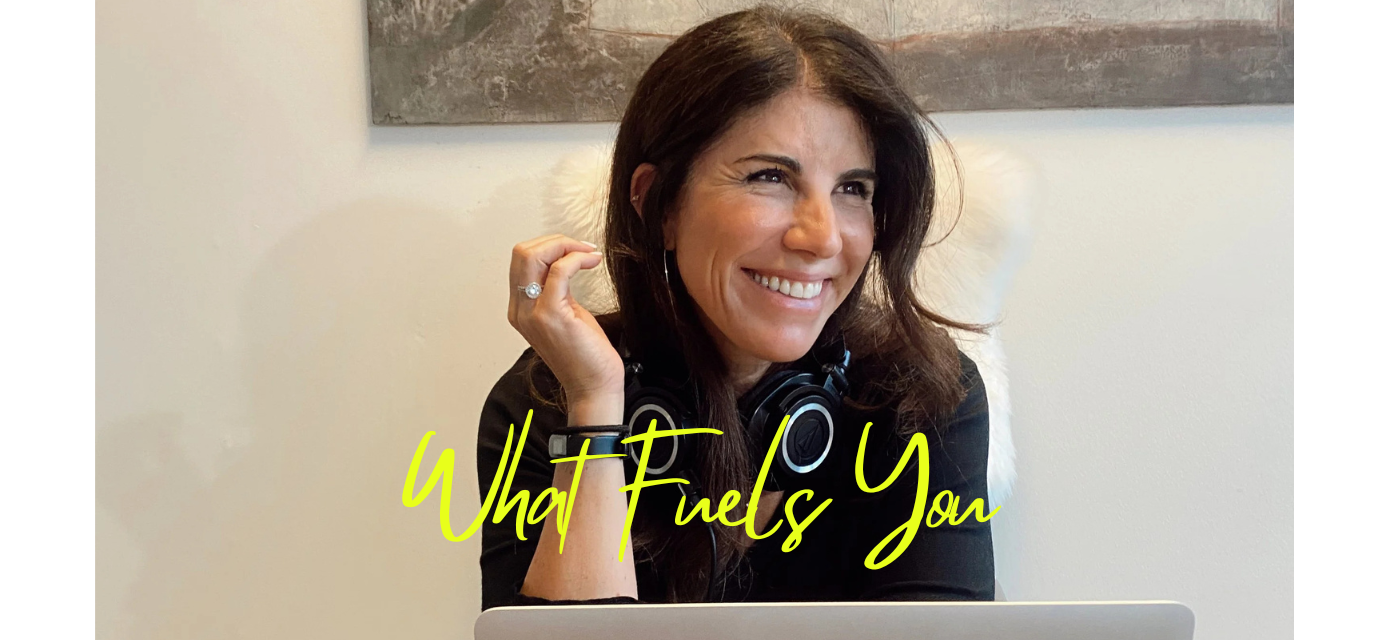
In this episode of What Fuels You, host Shawna Suerland sits down with the CEO and co-founder of Truveta for a conversation that covers a lot of ground: growing up near Daytona Beach, riding the early internet wave to start one of the web's first analytics companies, spending two decades shaping Microsoft's most iconic products, and ultimately co-founding a company he says he plans to spend the next 20 years building.
📋 Episode Chapters
| 00:00 | Rapid fire: first concert (Journey in Jacksonville), coffee, biking vs. running |
| 06:00 | Growing up near Daytona Beach; losing his father to colon cancer at age 15 |
| 11:00 | Choosing Duke over University of Florida — Coach K's first championships sealed it |
| 15:00 | Pre-med to mechanical engineering to computers — and starting Intersé in 1994 |
| 21:00 | How a website competitor prompted a startup — and how Microsoft acquired Intersé |
| 27:00 | 21 years at Microsoft: Exchange, Xbox, Surface, Windows, and Satya Nadella |
| 33:00 | Leaving Microsoft, becoming "time rich," discovering investing wasn't the answer |
| 36:00 | COVID-19, Providence Health, and the founding moment of Truveta |
| 40:00 | Business model: de-identified EHR data, Pfizer's surprise email, and the CDC |
| 44:00 | AI in healthcare: superpower without erasing accountability |
| 46:00 | The Truveta Genome Project: Regeneron partnership and the 10M sample goal |
| 49:00 | What fuels Terry: purpose, builders, and a 20-year horizon |
The Moment That Made It Obvious
COVID-19 forced many reckonings. For Terry Myerson, one was personal and national at the same time: the United States had no way to answer basic questions about what was happening inside its own clinical care system in real time.
"There wasn't time to run clinical trials to decide if a drug worked for COVID. We didn't know who was being most impacted by COVID and why. We weren't able to assess treatments."
— Terry Myerson
But the insight ran even deeper than the pandemic. In the episode, Myerson describes the experience virtually every patient knows — standing at a fork in the road on a major medical decision, and having almost nothing to go on.
"There's just so many examples each of us face where we've had to make decisions — these life-altering decisions for ourselves or our family members — without data. Really big decisions. And I think it should be different. We should have the data to say: what have other people in my situation done? What are the side effects? What have the outcomes been? What if I do nothing?"
— Terry Myerson
He makes it concrete with examples from his own life: choosing between chemotherapies, deciding on a knee surgery approach (hamstring, quadricep, or patella graft) with a doctor who says honestly, "You decide. I have no data." It's a frustration that, as Myerson sees it, is both unnecessary and solvable.
The name Truveta itself carries this ambition. As Myerson explains, "veta" means knowledge in Swedish. The name was coined by the chief marketing officer of Swedish Healthcare (part of Providence Health) before the company was formally incorporated. Truth and knowledge. Both a description and a destination.
From Microsoft to Mission: An Honest Winding Road
The path to Truveta wasn't a clean narrative arc, and Myerson doesn't try to make it one. After 21 years at Microsoft leading Exchange, Windows Phone, Xbox, Surface, and Windows alongside Satya Nadella, he left in 2018 when Nadella's cloud strategy rightly shifted the company's center of gravity away from the client group Myerson led.
"My group wasn't the center of the corporate strategy. The strategy was cloud and Office. Windows was a piece of that. It made great sense. And so the role I had wasn't on strategy."
— Terry Myerson
What followed was a period of searching that Myerson describes with characteristic honesty. Someone told him he was "time rich." He joined the Medtronic Venture Group and Carlyle Private Equity, tried golf, attempted a musical instrument. It wasn't enough.
"I didn't love having all this time. I was definitely bad at it," he admits. "The lack of a clear purpose...I was not as happy."
Starting Intersé Before Anyone Knew What a Website Was
That entrepreneurial instinct showed up very early. In 1993, as a sales engineer in Washington D.C., Myerson watched the internet emerge and couldn't convince his employer to build a website. His competitor built one. So he started a company.
"I tried to convince my company to build a website, and they wouldn't. And then my competitor built one. So I thought — I need to start a company and build websites."
— Terry Myerson
That was early 1994. The company evolved from web development into one of the internet's first website analytics and personalization platforms. By the time Microsoft acquired Intersé in 1997, the team had about 30 people and had transitioned fully to software. Myerson was 24 years old — with no contractual obligation to stay. He stayed for 21 years anyway.
"Having to not worry about paying the bills felt like freedom," he says. "All of a sudden, our job is to create innovation. Our job is to delight customers. This is wonderful."
How Truveta Works and Who It Serves
The business model is elegant in its logic. Thirty-plus health systems — covering more than 18% of all U.S. daily clinical care — contribute de-identified patient records to the Truveta platform. Pharmaceutical companies, medical device makers, government agencies, and academic researchers use that data to study outcomes, support regulatory approvals, and train medical AI. When a health system's data is accessed, that system receives compensation.
The first customer arrived before Truveta even had a sales team. Pfizer's chief safety officer emailed info@truveta.com looking for a solution to study COVID vaccine safety across the U.S. population.
"The joke we say in the company — which I think is partially true — is nobody was watching the mailbox because we didn't think anyone was going to reach out that way. But Patrick Corbell had this vision that this would uniquely support safety analytics. And it's like — okay, we're here now."
— Terry Myerson
Today, customers include Boston Scientific — using the platform to continuously track outcomes from its implanted devices — and the CDC, which Myerson describes as "a huge customer" studying public health on data that "has really never been available before."
No Direct Competitors But Competition for Attention
Health insurers have been selling de-identified claims data for years — but claims lack clinical richness. Truveta's differentiation is the de-identified medical record itself: longitudinal, clinically detailed, time-stamped, and aggregated at sufficient scale to surface meaningful patterns. Multiple third-party audits support Truveta's status as regulatory-grade, trusted data.
AI as a Superpower Without Erasing Accountability
Myerson's view on AI is both enthusiastic and unusually grounded:
"I look at AI as this incredible superpower that each of us has been offered — whether to write a press release or determine a medical diagnosis. But I don't think it changes the accountability. Ensuring it's great work and double-checking it — that still lies with the subject matter expert you've hired."
— Terry Myerson
He wants doctors to use AI. He wants lawyers to use AI. Both because it lets them process vastly more complex information far more quickly — but neither profession gets to use AI as an excuse to hand off judgment. "I kind of want them to use AI because they can digest so much more complex data so much more quickly. But still, I want that doctor to feel accountability for getting that diagnosis right."
His longer-term vision for Truveta is equally direct: today, regulatory-grade health insights are accessible only to sophisticated data scientists. AI should democratize that.
"Just the potential to express curiosity about what's going on in health in our country — that data should be at our fingertips. If we can deliver that, it's incredible potential."
— Terry Myerson
The Truveta Genome Project: Closing the Genetic Loop
Myerson frames the challenge clearly: genetics aren't routinely collected during clinical care today — not because they're unimportant, but because we don't yet know how to act on them systematically. And we can't learn how to act on them without collecting data at scale. A classic chicken-and-egg problem.
"We all believe our health outcomes are a function of our choices, our environment, and our genetics. But we don't have genetics data at scale. So we partnered with our health systems and Regeneron to create an incentive system — working with patients, obtaining their consent, and getting their genetic data sequenced."
— Terry Myerson
The goal is 10 million samples, collected through routine clinical visits at member health systems including Providence, Swedish, Virginia Mason, and CommonSpirit. Patients undergoing a standard blood draw for a cholesterol test, for example, could opt in to have their genome sequenced at the same time.
"Pick your condition: Alzheimer's, a rare disease, cancer, heart disease," Myerson says. "We should be able to detect these things much earlier, understand how to prevent them from oncoming much earlier. But we have to collect the data."
Building Culture at 320 Across a Distributed Team
With roughly 320 employees spanning Seattle, Michigan, Virginia, Colorado, and San Francisco, Truveta is the most diverse company Myerson says he's ever been part of. But the cultural challenge, he's candid, isn't headcount - it's distance.
"I think the cultural complexity comes from this hybrid workplace. How do you build culture and passion and loyalty and intensity when so many of your great teammates are not here? That's the challenge — not size."
— Terry Myerson
When asked what makes someone successful at Truveta, his answer is unambiguous: "Feeling the passion for the mission is key. We are builders. We're hands-on. We're working in a regulated industry with precious data, a whole lot of data. Being mission-led and science-led, that's the key."
5 Key Takeaways
CEO and Co-Founder
What happens when you've built some of the most-used software in the world and then discover that the one industry touching every human life is flying almost completely blind on data? For Terry Myerson, that realization didn't just spark curiosity. It sparked a company.
In this episode of What Fuels You, host Shawna Suerland sits down with the CEO and co-founder of Truveta for a conversation that covers a lot of ground: growing up near Daytona Beach, riding the early internet wave to start one of the web's first analytics companies, spending two decades shaping Microsoft's most iconic products, and ultimately co-founding a company he says he plans to spend the next 20 years building.
📋 Episode Chapters
| 00:00 | Rapid fire: first concert (Journey in Jacksonville), coffee, biking vs. running |
| 06:00 | Growing up near Daytona Beach; losing his father to colon cancer at age 15 |
| 11:00 | Choosing Duke over University of Florida — Coach K's first championships sealed it |
| 15:00 | Pre-med to mechanical engineering to computers — and starting Intersé in 1994 |
| 21:00 | How a website competitor prompted a startup — and how Microsoft acquired Intersé |
| 27:00 | 21 years at Microsoft: Exchange, Xbox, Surface, Windows, and Satya Nadella |
| 33:00 | Leaving Microsoft, becoming "time rich," discovering investing wasn't the answer |
| 36:00 | COVID-19, Providence Health, and the founding moment of Truveta |
| 40:00 | Business model: de-identified EHR data, Pfizer's surprise email, and the CDC |
| 44:00 | AI in healthcare: superpower without erasing accountability |
| 46:00 | The Truveta Genome Project: Regeneron partnership and the 10M sample goal |
| 49:00 | What fuels Terry: purpose, builders, and a 20-year horizon |
The Moment That Made It Obvious
COVID-19 forced many reckonings. For Terry Myerson, one was personal and national at the same time: the United States had no way to answer basic questions about what was happening inside its own clinical care system in real time.
"There wasn't time to run clinical trials to decide if a drug worked for COVID. We didn't know who was being most impacted by COVID and why. We weren't able to assess treatments."
— Terry Myerson
But the insight ran even deeper than the pandemic. In the episode, Myerson describes the experience virtually every patient knows — standing at a fork in the road on a major medical decision, and having almost nothing to go on.
"There's just so many examples each of us face where we've had to make decisions — these life-altering decisions for ourselves or our family members — without data. Really big decisions. And I think it should be different. We should have the data to say: what have other people in my situation done? What are the side effects? What have the outcomes been? What if I do nothing?"
— Terry Myerson
He makes it concrete with examples from his own life: choosing between chemotherapies, deciding on a knee surgery approach (hamstring, quadricep, or patella graft) with a doctor who says honestly, "You decide. I have no data." It's a frustration that, as Myerson sees it, is both unnecessary and solvable.
The name Truveta itself carries this ambition. As Myerson explains, "veta" means knowledge in Swedish. The name was coined by the chief marketing officer of Swedish Healthcare (part of Providence Health) before the company was formally incorporated. Truth and knowledge. Both a description and a destination.
From Microsoft to Mission: An Honest Winding Road
The path to Truveta wasn't a clean narrative arc, and Myerson doesn't try to make it one. After 21 years at Microsoft leading Exchange, Windows Phone, Xbox, Surface, and Windows alongside Satya Nadella, he left in 2018 when Nadella's cloud strategy rightly shifted the company's center of gravity away from the client group Myerson led.
"My group wasn't the center of the corporate strategy. The strategy was cloud and Office. Windows was a piece of that. It made great sense. And so the role I had wasn't on strategy."
— Terry Myerson
What followed was a period of searching that Myerson describes with characteristic honesty. Someone told him he was "time rich." He joined the Medtronic Venture Group and Carlyle Private Equity, tried golf, attempted a musical instrument. It wasn't enough.
"I didn't love having all this time. I was definitely bad at it," he admits. "The lack of a clear purpose...I was not as happy."
Starting Intersé Before Anyone Knew What a Website Was
That entrepreneurial instinct showed up very early. In 1993, as a sales engineer in Washington D.C., Myerson watched the internet emerge and couldn't convince his employer to build a website. His competitor built one. So he started a company.
"I tried to convince my company to build a website, and they wouldn't. And then my competitor built one. So I thought — I need to start a company and build websites."
— Terry Myerson
That was early 1994. The company evolved from web development into one of the internet's first website analytics and personalization platforms. By the time Microsoft acquired Intersé in 1997, the team had about 30 people and had transitioned fully to software. Myerson was 24 years old — with no contractual obligation to stay. He stayed for 21 years anyway.
"Having to not worry about paying the bills felt like freedom," he says. "All of a sudden, our job is to create innovation. Our job is to delight customers. This is wonderful."
How Truveta Works and Who It Serves
The business model is elegant in its logic. Thirty-plus health systems — covering more than 18% of all U.S. daily clinical care — contribute de-identified patient records to the Truveta platform. Pharmaceutical companies, medical device makers, government agencies, and academic researchers use that data to study outcomes, support regulatory approvals, and train medical AI. When a health system's data is accessed, that system receives compensation.
The first customer arrived before Truveta even had a sales team. Pfizer's chief safety officer emailed info@truveta.com looking for a solution to study COVID vaccine safety across the U.S. population.
"The joke we say in the company — which I think is partially true — is nobody was watching the mailbox because we didn't think anyone was going to reach out that way. But Patrick Corbell had this vision that this would uniquely support safety analytics. And it's like — okay, we're here now."
— Terry Myerson
Today, customers include Boston Scientific — using the platform to continuously track outcomes from its implanted devices — and the CDC, which Myerson describes as "a huge customer" studying public health on data that "has really never been available before."
No Direct Competitors But Competition for Attention
Health insurers have been selling de-identified claims data for years — but claims lack clinical richness. Truveta's differentiation is the de-identified medical record itself: longitudinal, clinically detailed, time-stamped, and aggregated at sufficient scale to surface meaningful patterns. Multiple third-party audits support Truveta's status as regulatory-grade, trusted data.
AI as a Superpower Without Erasing Accountability
Myerson's view on AI is both enthusiastic and unusually grounded:
"I look at AI as this incredible superpower that each of us has been offered — whether to write a press release or determine a medical diagnosis. But I don't think it changes the accountability. Ensuring it's great work and double-checking it — that still lies with the subject matter expert you've hired."
— Terry Myerson
He wants doctors to use AI. He wants lawyers to use AI. Both because it lets them process vastly more complex information far more quickly — but neither profession gets to use AI as an excuse to hand off judgment. "I kind of want them to use AI because they can digest so much more complex data so much more quickly. But still, I want that doctor to feel accountability for getting that diagnosis right."
His longer-term vision for Truveta is equally direct: today, regulatory-grade health insights are accessible only to sophisticated data scientists. AI should democratize that.
"Just the potential to express curiosity about what's going on in health in our country — that data should be at our fingertips. If we can deliver that, it's incredible potential."
— Terry Myerson
The Truveta Genome Project: Closing the Genetic Loop
Myerson frames the challenge clearly: genetics aren't routinely collected during clinical care today — not because they're unimportant, but because we don't yet know how to act on them systematically. And we can't learn how to act on them without collecting data at scale. A classic chicken-and-egg problem.
"We all believe our health outcomes are a function of our choices, our environment, and our genetics. But we don't have genetics data at scale. So we partnered with our health systems and Regeneron to create an incentive system — working with patients, obtaining their consent, and getting their genetic data sequenced."
— Terry Myerson
The goal is 10 million samples, collected through routine clinical visits at member health systems including Providence, Swedish, Virginia Mason, and CommonSpirit. Patients undergoing a standard blood draw for a cholesterol test, for example, could opt in to have their genome sequenced at the same time.
"Pick your condition: Alzheimer's, a rare disease, cancer, heart disease," Myerson says. "We should be able to detect these things much earlier, understand how to prevent them from oncoming much earlier. But we have to collect the data."
Building Culture at 320 Across a Distributed Team
With roughly 320 employees spanning Seattle, Michigan, Virginia, Colorado, and San Francisco, Truveta is the most diverse company Myerson says he's ever been part of. But the cultural challenge, he's candid, isn't headcount - it's distance.
"I think the cultural complexity comes from this hybrid workplace. How do you build culture and passion and loyalty and intensity when so many of your great teammates are not here? That's the challenge — not size."
— Terry Myerson
When asked what makes someone successful at Truveta, his answer is unambiguous: "Feeling the passion for the mission is key. We are builders. We're hands-on. We're working in a regulated industry with precious data, a whole lot of data. Being mission-led and science-led, that's the key."